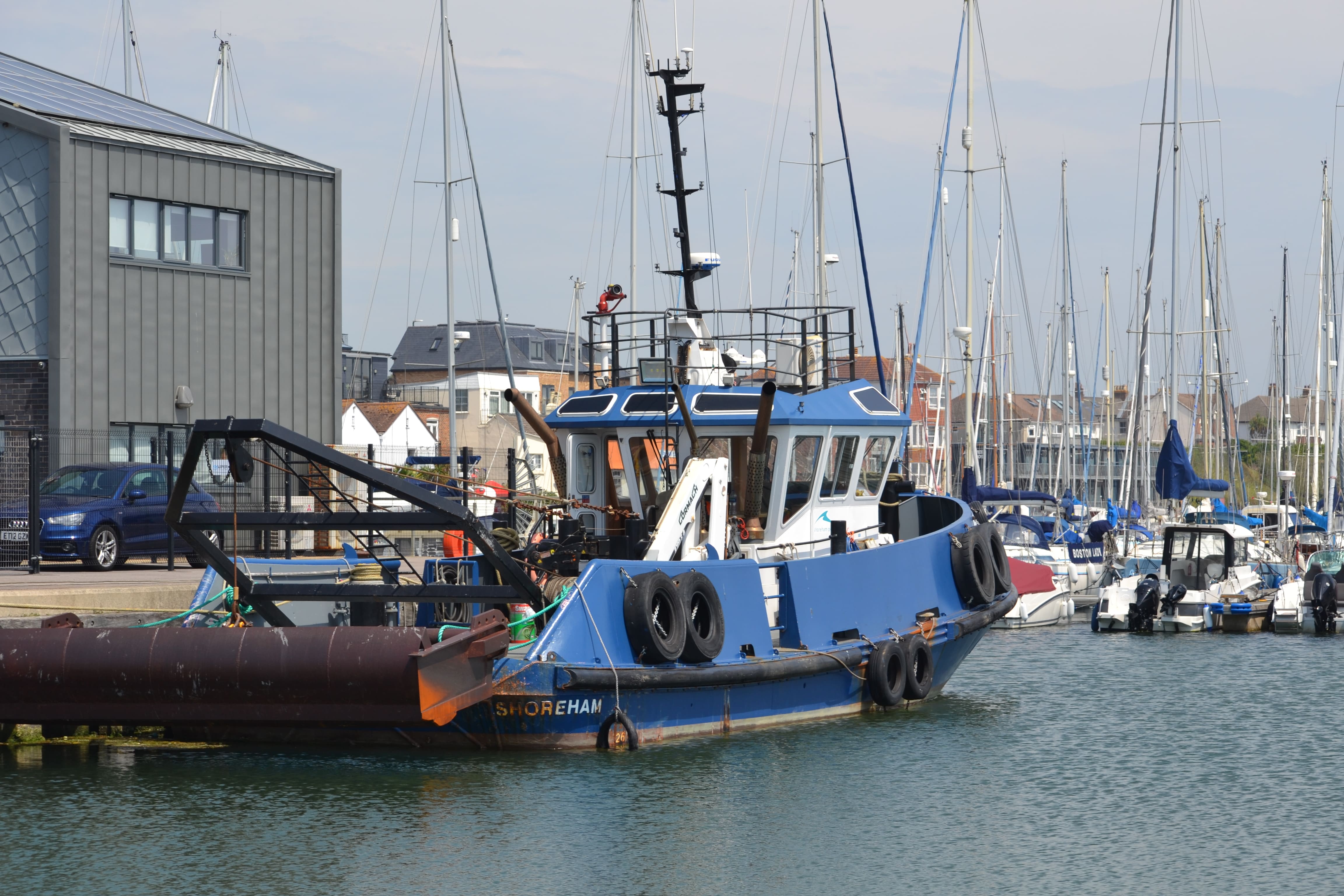
Sustainability Week at Shoreham Port: local action for a cleaner coast
Last week, we attended Shoreham Port’s Sustainability Week, joining three talks focused on marine conservation, food waste, and supporting our coast.
The day was a useful reminder that sustainability is not one single issue, and involves protecting our coastline, supporting local communities, helping businesses adapt and building the infrastructure needed for cleaner transport and energy.
It was great to hear from so many local experts, and really get a feel for the variety of environmentally conscious programmes developing at Shoreham Port, and down the coast.
This year's theme for Sustainability Week was People, Port & Planet: Working Together for a Greener Future, reflecting Shoreham Port’s commitment as a Trust Port to create positive change across the Port and wider community.
Sussex IFCA: protecting the coast while supporting fishing communities
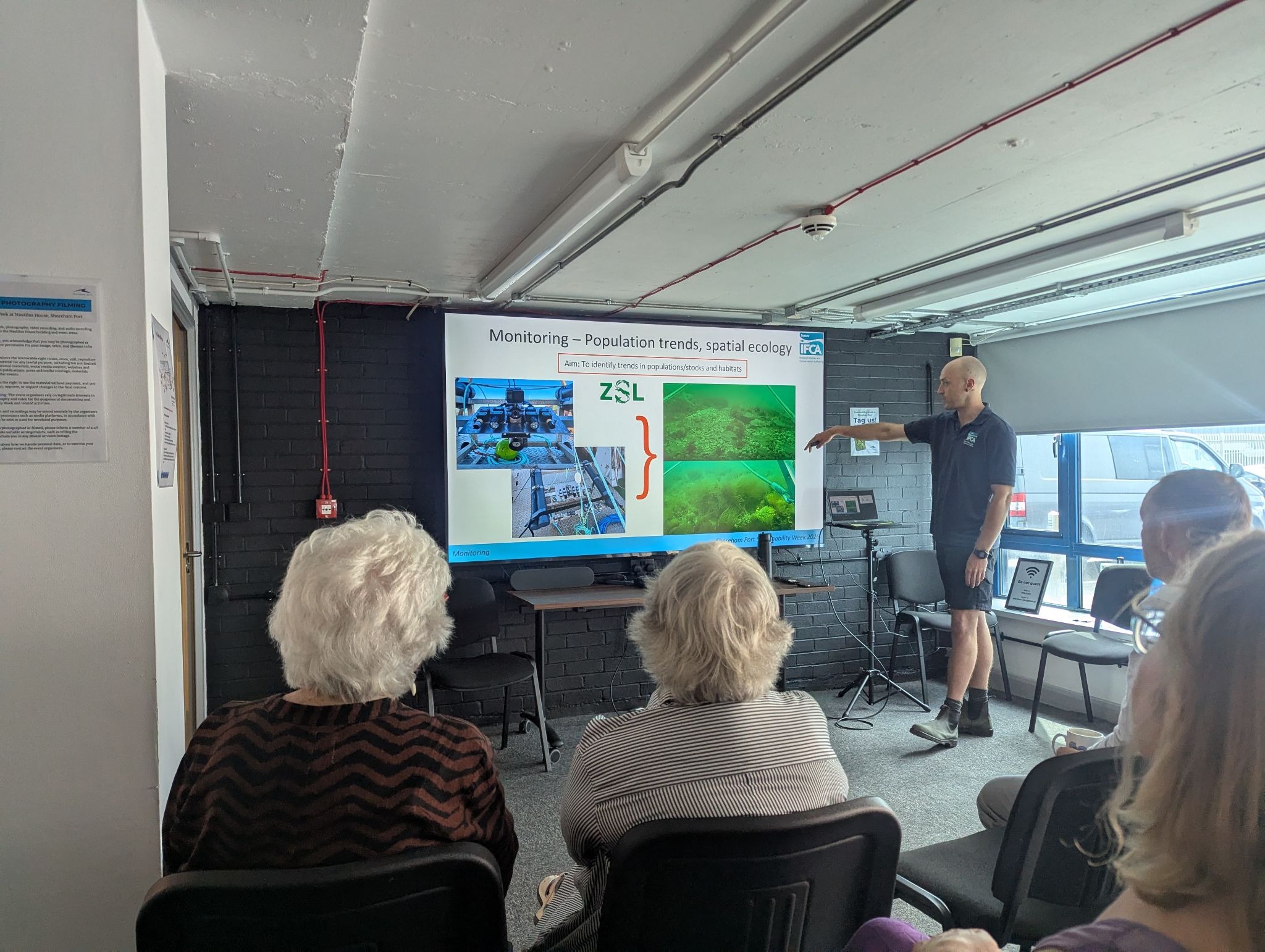
Dr. George Balchin, Conservation and Research Manager for the Sussex Inshore Fisheries & Conservation Authority kicked the day off, covering its role in managing inshore fisheries and protecting the marine environment along the Sussex coast.
The session explored the challenge of balancing conservation with the needs of fishing communities - fishing is part of the area’s heritage and the oldest profession in Britain, with some local families working in the industry for over 1,000 years, so any new regulation needs to be implemented fairly and with respect for that tradition.
Dr Balchin discussed how tools such as bait cameras, GoPros and monitoring equipment help build a clearer picture of fish stocks, habitats and fishing activity. One particularly memorable example was the mention of historic kelp baseline data from 1983, which had nearly been thrown away in a skip during a building clearout, but is now seen as an essential baseline for understanding long-term change.
The talk also made the point that issues such as trawling need careful discussion. Rather than treating one method as simply good or bad, the focus should be on where activity is happening, how it is managed and how vulnerable habitats can be protected.
Brighton & Hove Food Partnership: rethinking food waste
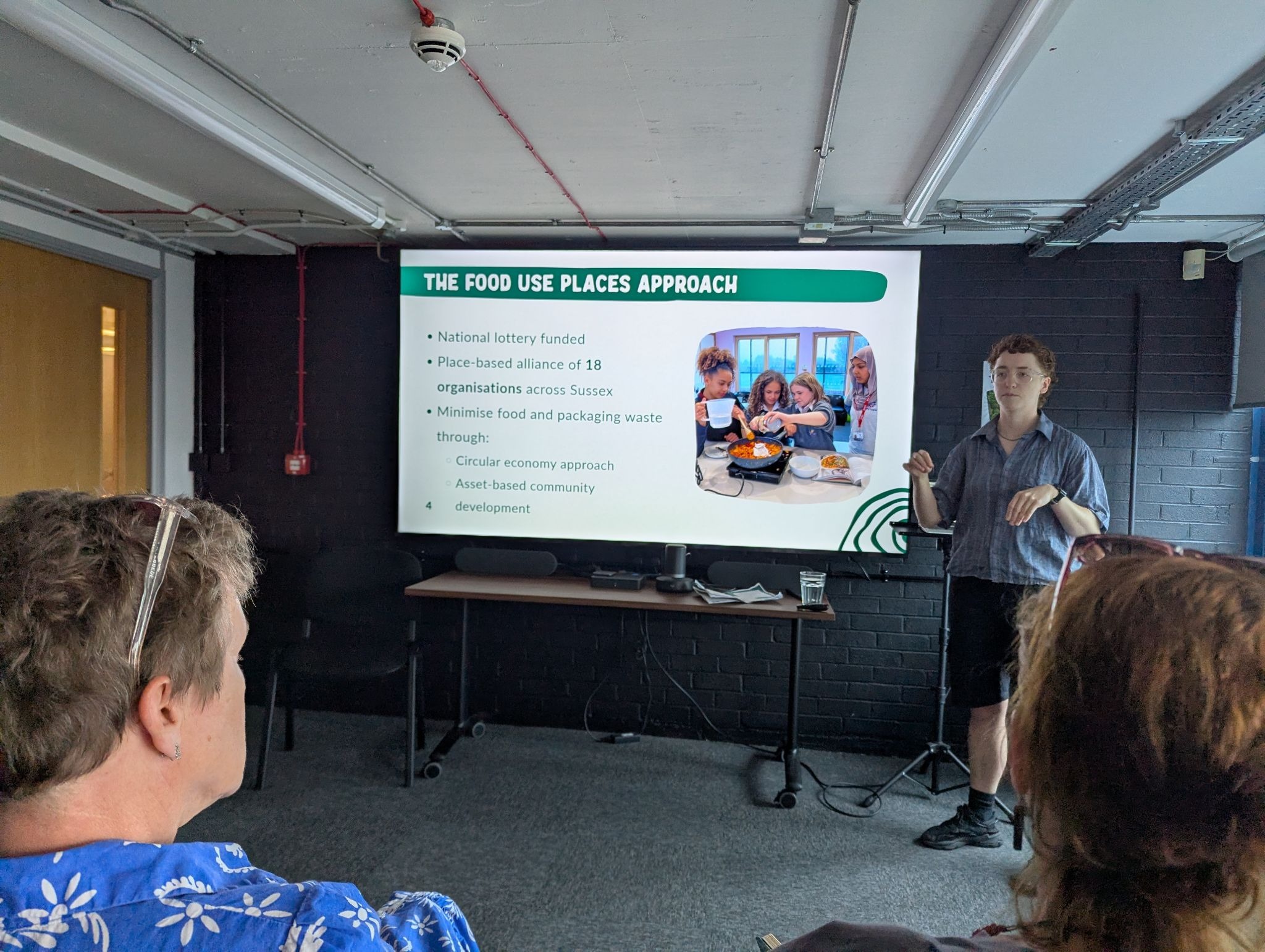
The second talk was from Meli Stanley, Marketing and Community Engagement Specialist at the Brighton & Hove Food Partnership, focused on the Food Use Places approach to tackling food waste.
Food waste is a major environmental issue, but the session made it feel practical and relatable for everyday people - around a third of food produced globally is lost or wasted, and Our World in Data estimates that food waste is responsible for around 6% of global greenhouse gas emissions.
The talk covered everyday examples, including how bread, potatoes and bananas are among the most commonly wasted foods, and how we can prevent that as regular consumers. It also covered the wider impact of food waste, from the energy used to grow, transport and store food, to the emissions created when food rots or has to be moved again for disposal.
The Food Use Places project is about creating a new norm around using food well. This includes helping people plan meals, store food properly, cook with confidence, share surplus food and compost where possible. The project also works with communities that are often less represented in climate action, including minority and low-income groups.
A few of the reported impact figures were impressive indicators of the Food Partnership’s success, including around 2,000 tonnes of food used rather than wasted, 10,500 people reached, and significant savings through local composting.
We recommend having a look through their website, including a handy set of flexible recipes, the ultimate guide to reducing food waste, and a great fortnightly newsletter!
Business for Sussex Bay: nature, community and action
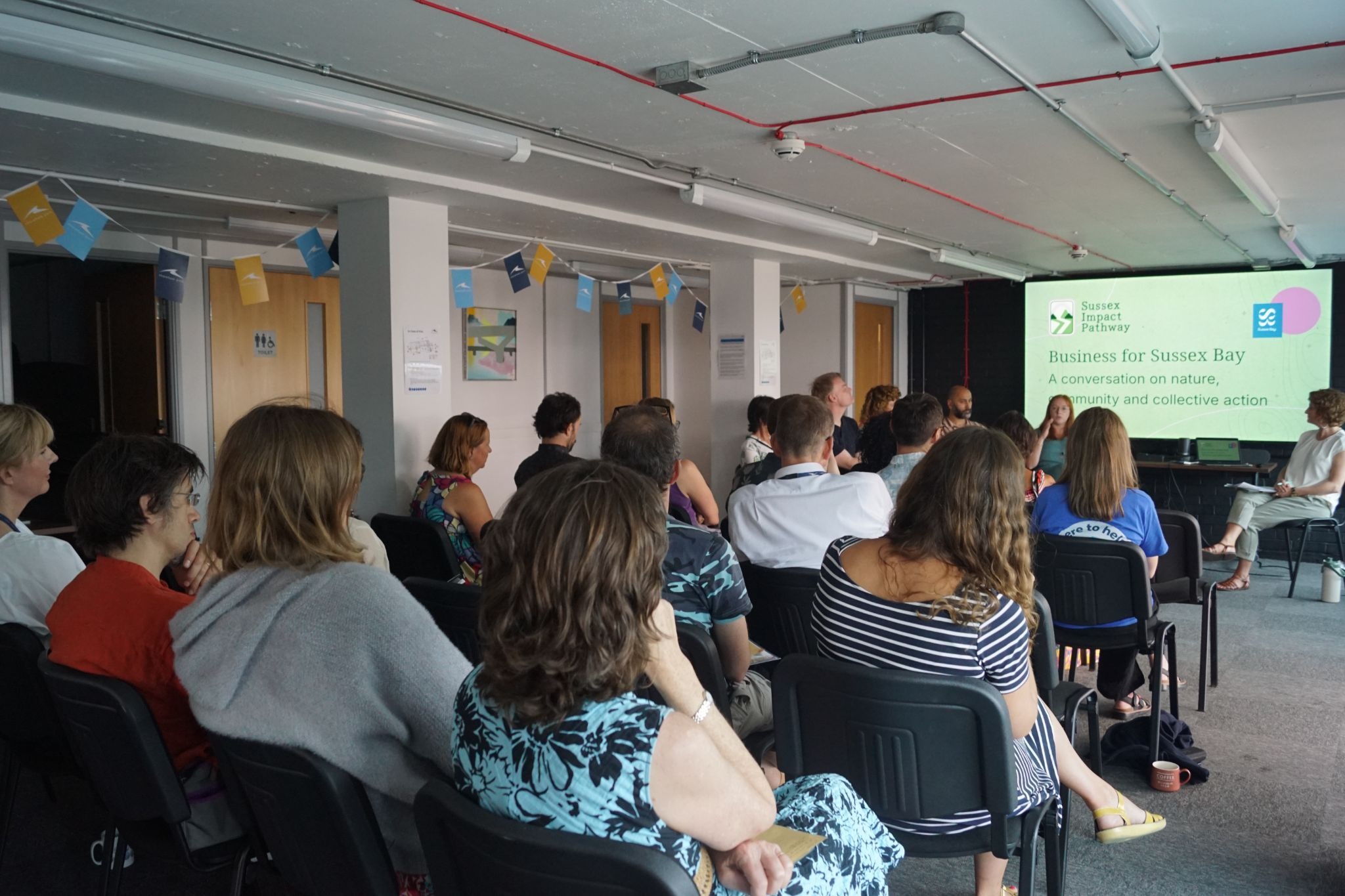
The final session was a panel discussion on Business for Sussex Bay, looking at how businesses can support nature recovery and community-led environmental action.
This talk brought together local businesses, sustainability leaders and regional partners to explore how ambition turns into action.
The discussion focused on collaboration, and how charities, local authorities, community groups and businesses all have a role to play, and the strongest projects are often those where these groups support each other.
A key point was that environmental restoration and business growth should not be seen as separate aims. A healthier coast supports tourism, fishing, recreation, wellbeing and the local economy. At the same time, businesses can help drive investment, awareness and practical change.
Sustainability works best when it is rooted in place, and Shoreham Port is a strong example of a working environment where local industry, community and nature all meet.
DW Energy’s work with Shoreham Port
The themes from the day strongly connect with DW Energy’s recent work supporting Shoreham Port’s decarbonisation.
Shoreham Port has been taking practical steps to reduce emissions and improve energy resilience across its operations, and we’re proud to support a forward-thinking trailblazer in efforts to decarbonise the maritime industry as a whole.
We have recently supported Shoreham Port with:
Shoreham Port’s electric HGV charging project. DW Energy delivered two 80 kW EV chargers and a 200 kWh battery storage system, helping the port charge its first ever electric HGVs overnight while making use of its existing solar PV array.
The Berth Zero shore power project. We installed a shore power network for fishing vessels, helping reduce reliance on onboard diesel generators while vessels are berthed overnight, allowing them to instead buy clean generated electricity straight from the port.
Final thoughts
Spending the day down at Shoreham Port for Sustainability Week was a really positive reminder of how much is already happening locally, and the deep level of research being done by different groups into how we can work together to protect our local environment.
Protecting the coast, supporting communities and helping industry decarbonise are closely connected, and days like this show the importance of connecting, sharing ideas, and collaborating as businesses to support these goals together.