Plug in solar - what homeowners should know
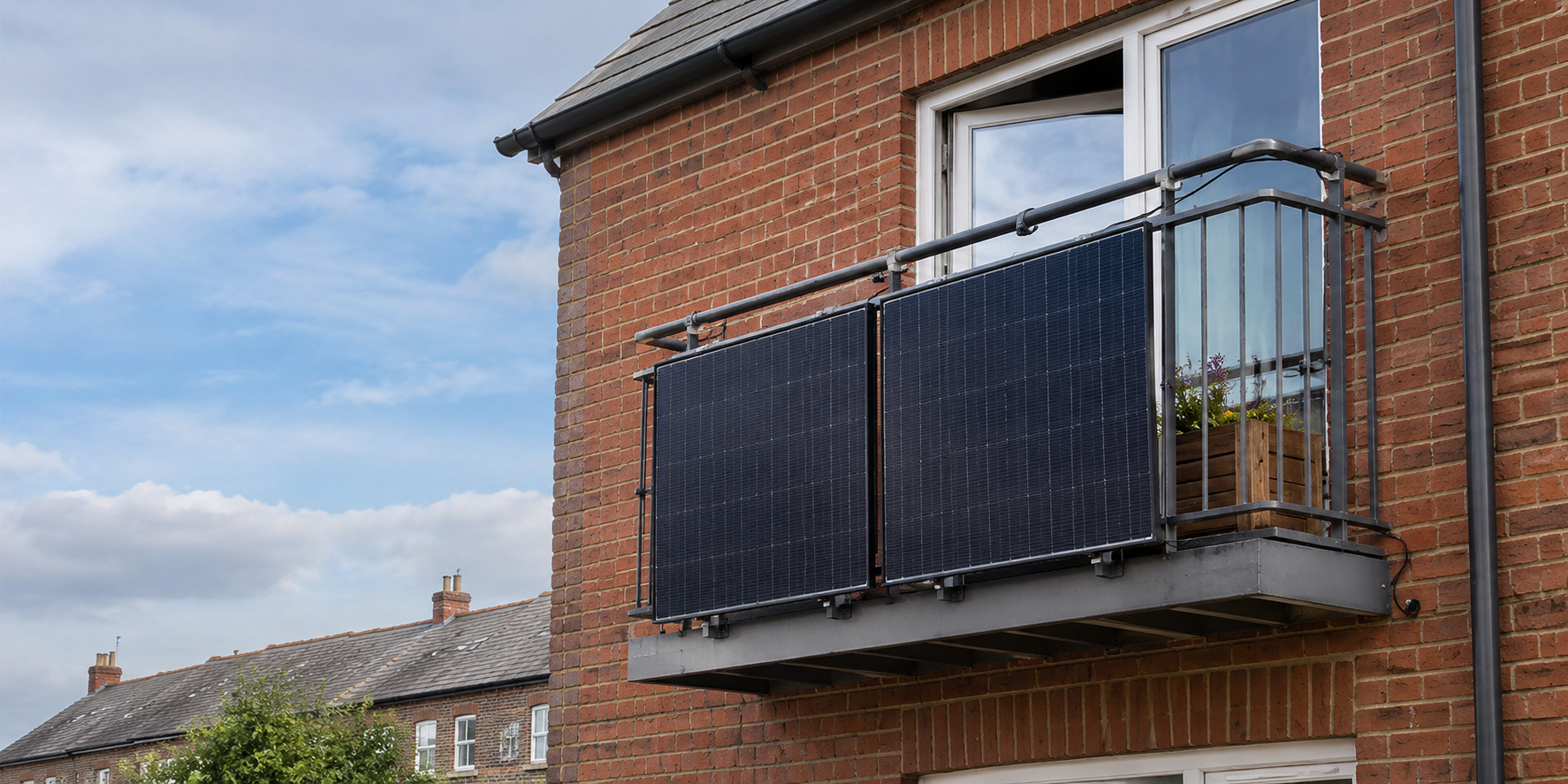
Plug-in solar panels are small scale solar PV systems designed to connect to a suitable household socket. They became legal to buy and use across Great Britain on 27 August 2026, giving homeowners, tenants and people living in flats a lower-cost way to generate some of their own electricity.
The attraction is easy to understand. These compact systems are simpler and more affordable than a conventional rooftop installation, with compliant devices able to supply up to 800 W of power through a suitable household socket.
However, simple to buy does not mean suitable for every home. Plug-in solar still generates electricity and supplies it to your property’s electrical system. That makes product compliance, the condition of your wiring and the way the panels are installed important considerations.
What are the safety risks of plug-in solar panels?
A compliant plug-in solar system is not inherently unsafe. The potential risks depend on the product being used, the condition of the property’s electrics and whether the equipment has been installed correctly.
Ahead of the rollout, the Electrical Contractors’ Association, Electrical Safety First, the Institution of Engineering and Technology, NICEIC and SELECT published a joint statement on plug-in solar panels.
The organisations supported making clean energy more accessible, but warned that safety, product standards and consumer protection needed to be central to the rollout.
Their concern was that plug-in solar is not quite the same as connecting an ordinary household appliance. Instead of only drawing electricity from a circuit, it also supplies electricity back into it. An unsuitable electrical installation, incorrectly selected socket or incompatible protective device could therefore create risks that may not be obvious to the homeowner.
The statement highlighted several areas requiring particular care:
- Older, damaged or deteriorating household wiring
- Fuse boxes and protective devices that may not be suitable
- Localised overheating where a circuit is unsuitable
- Non-compliant products or accessories
- The use of extension leads, adaptors or multiple linked devices
- Unsafe mounting on balconies, walls, gardens or outbuildings
- Registration, insurance and permission requirements
The rules and product requirements have developed since the statement was published, but the underlying message remains useful. Plug-in solar should still be treated as electricity-generating equipment, not as an ordinary household gadget.
What should you check before buying plug-in solar panels?
Before purchasing a system, work through the following checks:
- Choose a compliant product. Buy from a registered UK seller and confirm that the exact device appears on the Energy Networks Association register of equipment meeting UK requirements.
- Check your home’s electrics. Older consumer units, rewireable fuses or wiring of an uncertain condition may not provide the protection required. Speak to a qualified electrician if you are unsure.
- Use a suitable socket. Plug-in solar panels must connect directly to an appropriate household socket. Do not use an extension lead, international adaptor, altered plug or overloaded socket.
- Install outdoor sockets properly. Any new outdoor socket must be weatherproof, suitable for its location and installed by a qualified electrician.
- Mount the panels securely. Panels and cables must be able to withstand wind and weather without damaging the building, blocking an escape route or creating a trip hazard.
- Check permissions and insurance. Tenants and leaseholders may need approval from a landlord, freeholder or building manager. It is also sensible to check with your insurer.
- Register the device. Plug-in solar systems must be registered after installation so the electricity network knows what generation has been connected.
Only one plug-in solar device should currently be connected at each property. Multiple devices must not be linked together or “daisy-chained”.
Plug-in solar panels vs rooftop solar: what is the difference?
Plug-in solar can provide an accessible starting point for households that cannot accommodate or afford a conventional rooftop system. However, it is not a direct replacement for a professionally designed solar installation.
A full home solar panel installation begins with an assessment of the property, available roof space, shading, household electricity use and existing electrical infrastructure. The system can then be designed around what the homeowner wants to achieve, including whether battery storage may be worthwhile.
A professional solar installation should provide:
- A system designed around the property and its electricity use
- An assessment of the existing electrical installation
- Appropriate electrical protection and connection arrangements
- Safe roof mounting and weatherproofing
- Installation, commissioning and system documentation
- Clear product and workmanship warranties
- Monitoring, aftercare and a route to technical support
- The ability to plan for battery storage or future changes in electricity use
These details affect how effectively the system performs, how safely it integrates with the home and how well it can be supported throughout its working life.
Our view on plug-in solar panels
Making renewable energy accessible to more households is a positive step. For some homes, a compliant plug-in solar system could provide a practical way to generate a modest amount of electricity at a lower upfront cost.
However, affordability should not encourage people to overlook their wiring, fuse box, product compliance, mounting arrangements or registration responsibilities.
If your electrics are older, you need a new outdoor socket, you already have solar or battery storage, or you are simply unsure whether a system is suitable, speak to a qualified electrician before connecting anything.
For homeowners looking for a larger, long-term solar system designed around their property and electricity use, a professional survey remains the right place to start.
Thinking about solar panels for your home?
DW Energy designs and installs home solar PV systems across Sussex and the South East. Our recommendations are based on your property, electrical installation, energy use and what you want the system to achieve.
Book a home solar consultation.