Solar panels for warehouses and distribution centres
Turn available warehouse roof space into a source of renewable electricity with commercial solar PV designed around your site’s energy use, roof construction, grid connection and day-to-day operations.
DW Energy delivers warehouse solar installations across Sussex and the South East, with every system designed around the practical and commercial requirements of the business.
Commercial solar designed around warehouse operations
Warehouses and distribution centres can have substantial electricity requirements throughout the working day. Lighting, refrigeration, machinery, handling equipment, offices and vehicle charging may all contribute to the site’s overall demand.
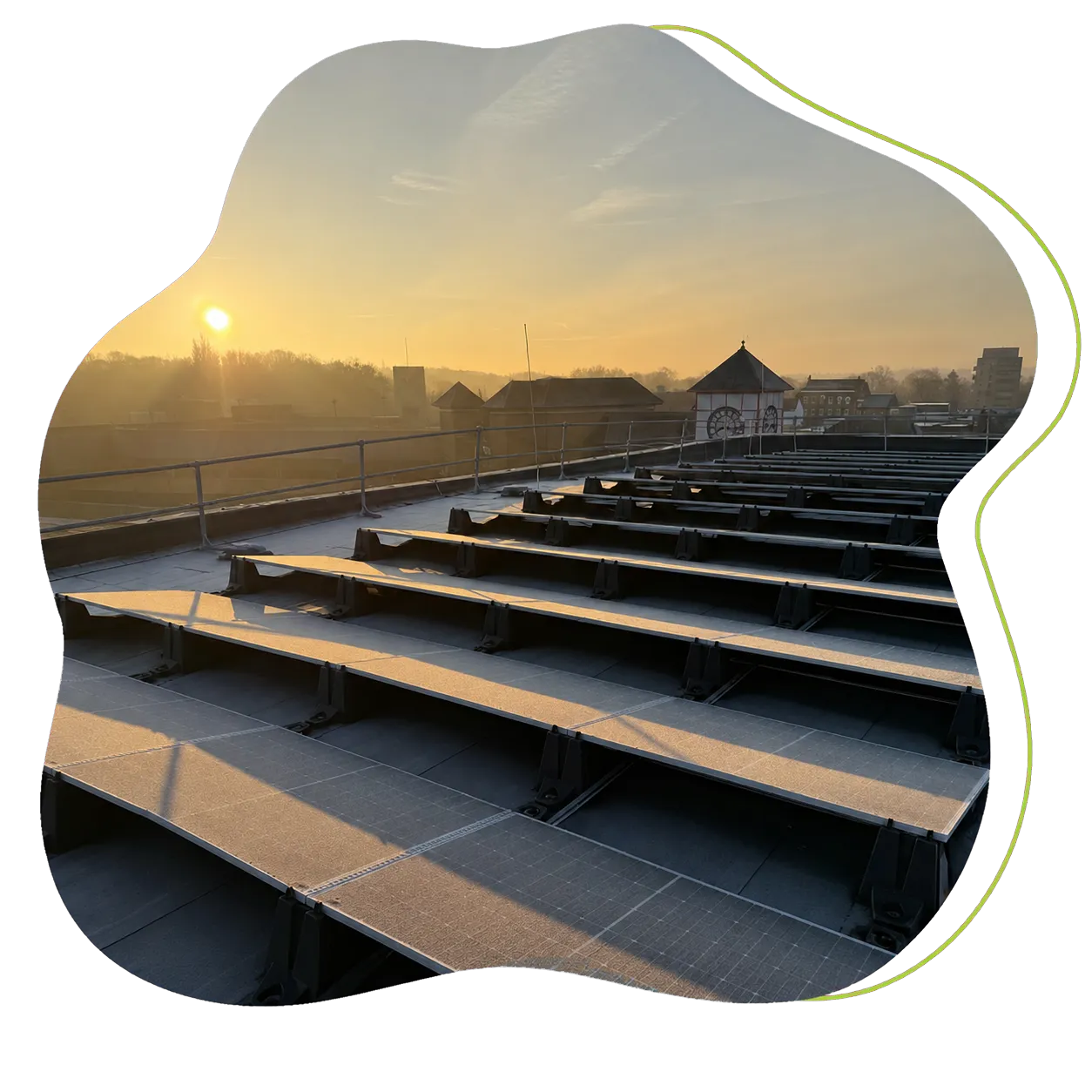
Large roof areas can make warehouses well suited to commercial solar, but roof space alone should not determine the size of the installation. The system must be designed around when electricity is used, the condition and structure of the roof, the existing electrical infrastructure and the site’s grid connection.
Large roof areas can make warehouses well suited to commercial solar, but roof space alone should not determine the size of the installation. The system must be designed around when electricity is used, the condition and structure of the roof, the existing electrical infrastructure and the site’s grid connection.

Make productive use of warehouse roof space
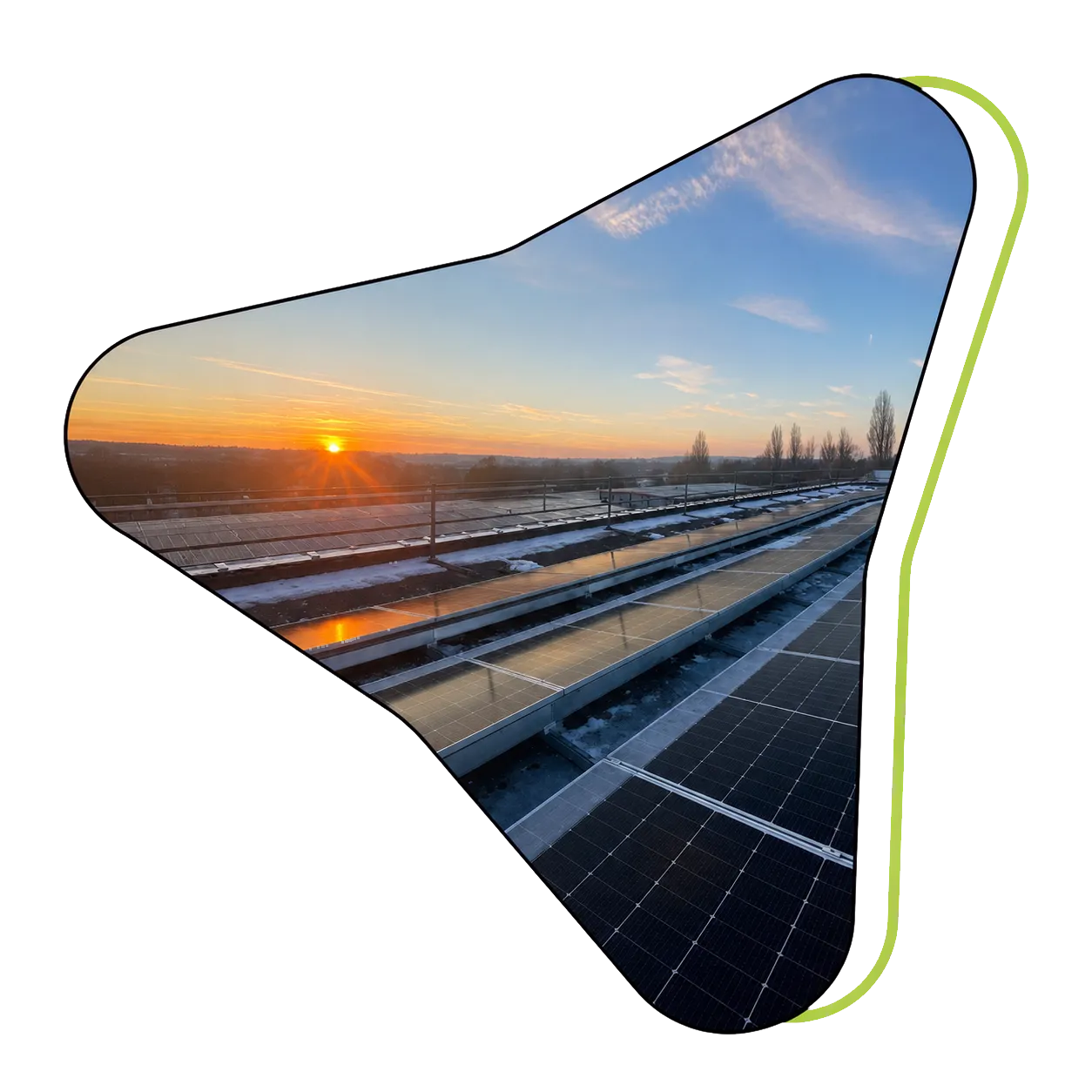
Suitable flat or pitched warehouse roofs can provide space for a substantial solar array, subject to their condition, structural capacity, layout and safe access requirements.
Suitable flat or pitched warehouse roofs can provide space for a substantial solar array, subject to their condition, structural capacity, layout and safe access requirements.
Reduce purchased electricity
Generate renewable electricity at the warehouse and reduce reliance on grid power when solar generation aligns with the site’s operational demand.
Generate renewable electricity at the warehouse and reduce reliance on grid power when solar generation aligns with the site’s operational demand.
Plan around live operations
Installation access, deliveries, loading areas, parking, equipment movements and electrical isolations can be coordinated around the continued operation of the site.
Installation access, deliveries, loading areas, parking, equipment movements and electrical isolations can be coordinated around the continued operation of the site.







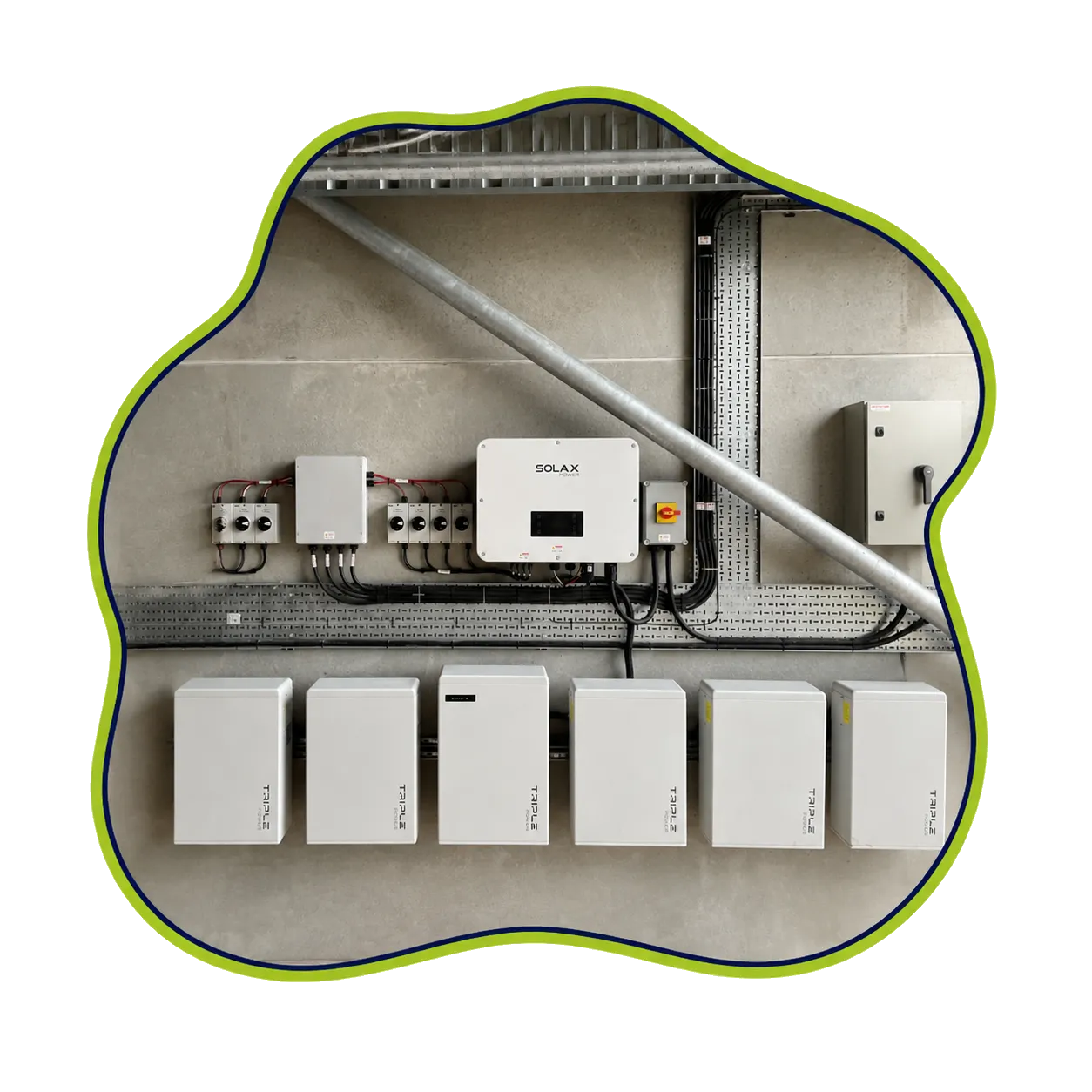
Solar, battery storage and electrical infrastructure in one coordinated system
A warehouse solar installation must work safely with the building’s roof, electrical supply, grid connection and operational requirements.
DW Energy combines renewable energy expertise with the capability and accountability of an established commercial electrical contractor.
DW Energy combines renewable energy expertise with the capability and accountability of an established commercial electrical contractor.
Electrical and grid integration
Assessment of the existing supply, switchgear and electrical infrastructure helps establish how the proposed system can be integrated safely and practically.
DW Energy can also deliver the supporting commercial electrical work required as part of the installation.
Assessment of the existing supply, switchgear and electrical infrastructure helps establish how the proposed system can be integrated safely and practically.
DW Energy can also deliver the supporting commercial electrical work required as part of the installation.
Battery storage where it adds value
Commercial battery storage can retain surplus solar electricity for use later. Its value depends on the warehouse’s operating hours, demand profile, tariffs and export levels.
Commercial battery storage can retain surplus solar electricity for use later. Its value depends on the warehouse’s operating hours, demand profile, tariffs and export levels.
EV charging for staff and commercial vehicles
Business EV charging can be integrated with the wider energy system to support staff vehicles, commercial fleets or future transport requirements.
Business EV charging can be integrated with the wider energy system to support staff vehicles, commercial fleets or future transport requirements.
Trusted By



Four Seasons Fuel: commercial solar across a warehouse and office
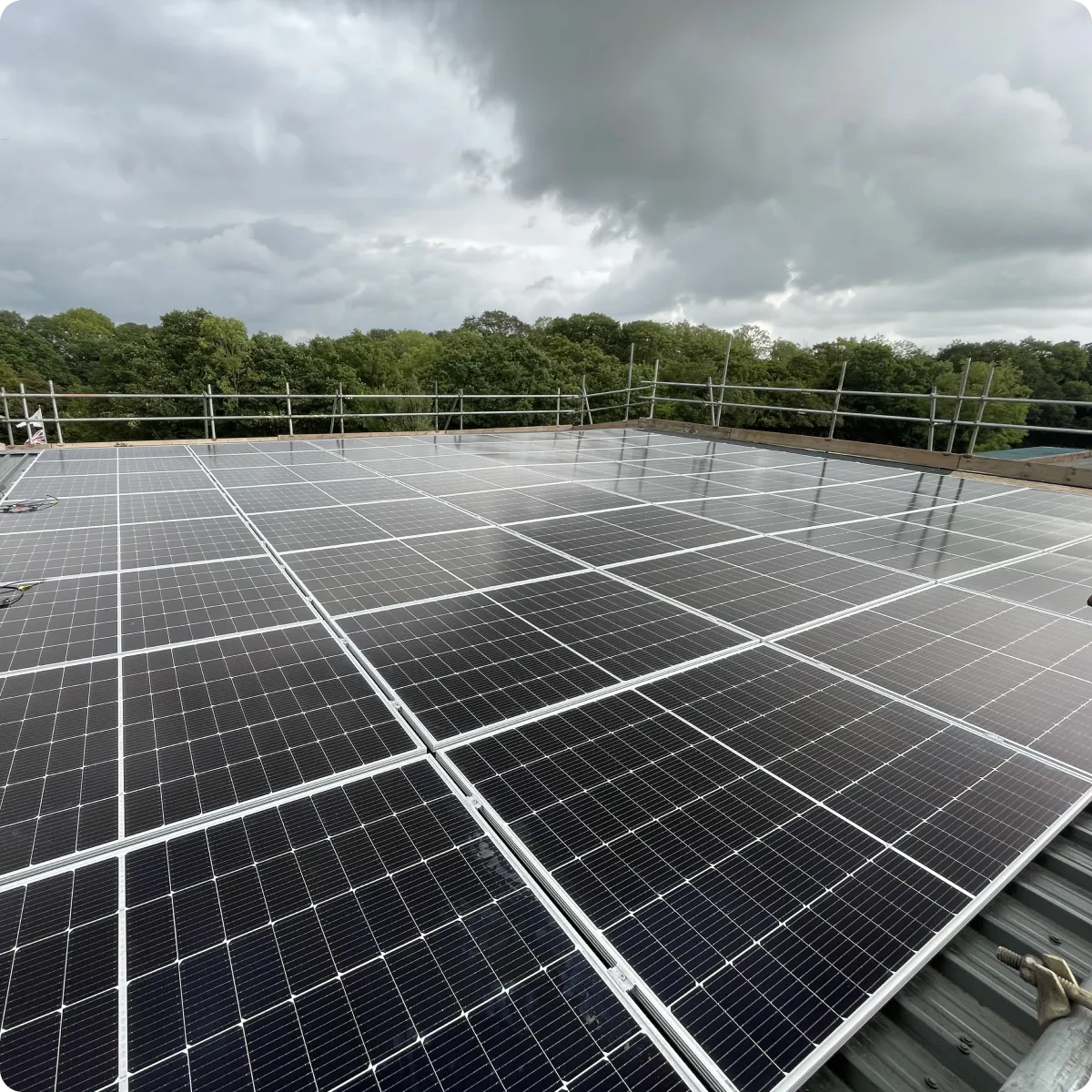
DW Energy designed and installed a 106.9 kWp commercial solar PV system for Four Seasons Fuel at its Coneyhurst premises in West Sussex.
The installation spans the company’s warehouse and office buildings, with the system designed around significant electricity demand, two separate buildings and the physical constraints of a fragile warehouse roof.
Designed around a high-energy commercial site

Warehouse and office electricity demand
Heavy machinery operates alongside the company’s office facilities, creating different electricity requirements across the site.
Two separate buildings
The system needed to generate electricity across both the main warehouse and the adjoining office building.
Site-specific solar design
DW Energy designed the array around the available roof space, the electrical requirements of each building and the company’s operational energy demand.
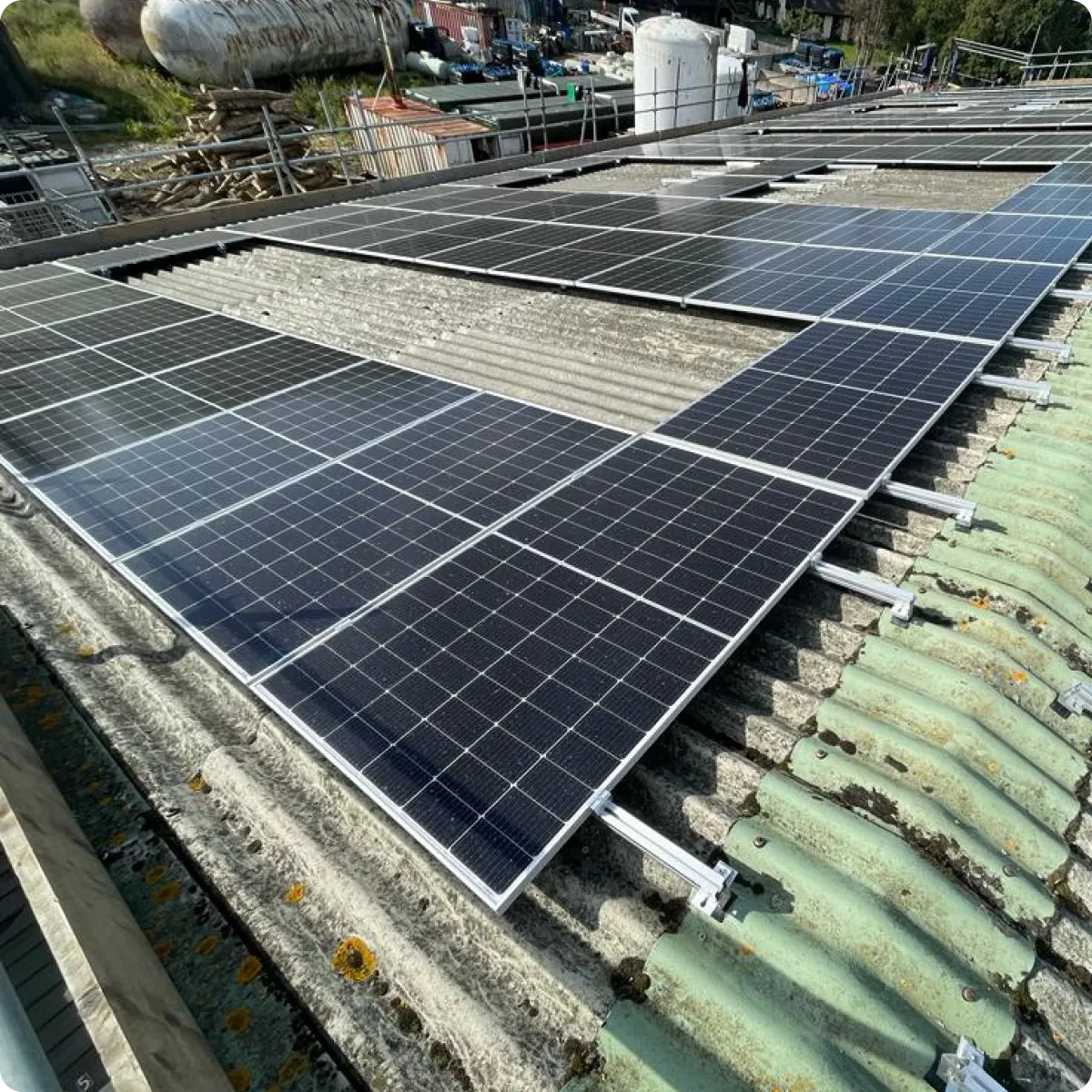
Installing solar safely on a fragile warehouse roof
Careful roof assessment
The fragile construction of the warehouse roof required careful planning before the panels and mounting equipment could be installed.
Specialist roof fixings
A suitable fixing system was selected to distribute the installation safely and secure the panels to the warehouse roof.
Protecting the building
The installation approach was designed to avoid placing unnecessary stress on the roof or compromising its watertight integrity.
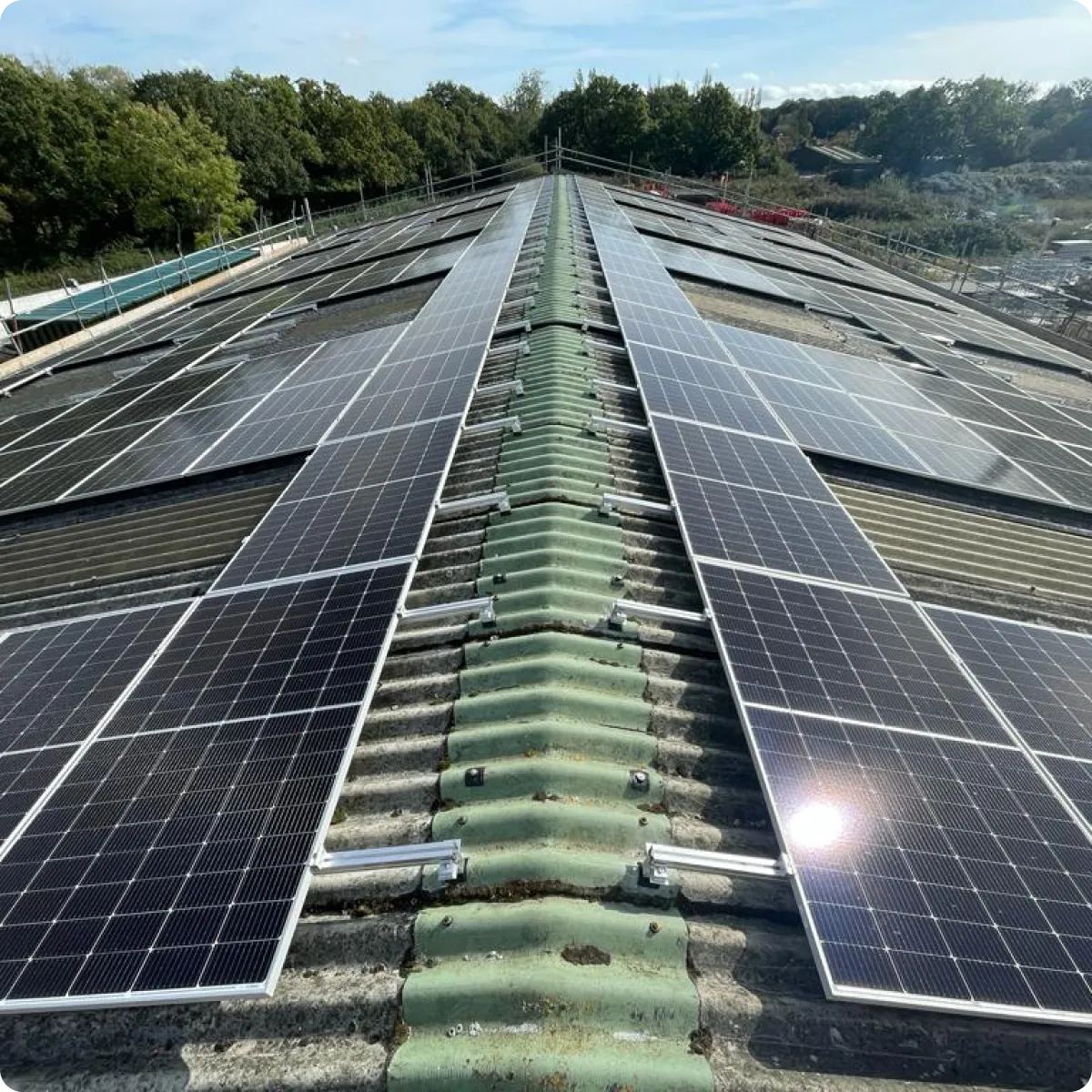
264 solar panels providing 106.9 kWp of capacity
216 warehouse-mounted panels
The main warehouse array comprises 216 solar panels, making productive use of the available industrial roof space.
48 panels on the office building
A further 48 panels were installed on the office, bringing the complete installation to 264 panels.
Renewable electricity generated on site
The completed system provides Four Seasons Fuel with a substantial source of on-site electricity generation, reducing its reliance on grid power when solar generation is available.
What our commercial solar clients say
.svg)
The installation was completed in just eight days and the team were excellent throughout. They kept everything on track, worked neatly and made sure the project was delivered without disrupting our operations.
Kelgray Products
Managing Director
The team took the agreed design and turned it into a completed installation while managing access, logistics, health and safety, testing and commissioning. DW Energy kept things under control and delivered safely within the required timeframe.
Sunbird
Head of Engineering
The advice was clear, the installation was well handled. We are very happy with the outcome and would recommend DW Energy to other businesses looking to take greater control of their energy costs.
Four Seasons Fuel
Managing Director
Warehouse solar FAQs
Are solar panels suitable for warehouses?
Often, yes. Warehouses frequently have large areas of otherwise unused roof space and may consume significant amounts of electricity during daylight hours.
Suitability depends on the roof’s condition, construction and structural capacity, together with the site’s electricity demand and grid connection. A roof and energy assessment is needed before the appropriate system size and likely commercial return can be established.
Suitability depends on the roof’s condition, construction and structural capacity, together with the site’s electricity demand and grid connection. A roof and energy assessment is needed before the appropriate system size and likely commercial return can be established.
Can solar panels be installed on a fragile warehouse roof?
Potentially, but the roof must be assessed carefully before an installation is proposed. Its condition, structural capacity, remaining lifespan and fixing requirements all need to be considered.
Some roofs may require specialist mounting equipment, reinforcement, repair or replacement. At Four Seasons Fuel, DW Energy used specialist fixings to install solar safely without compromising the fragile warehouse roof’s watertight integrity.
Some roofs may require specialist mounting equipment, reinforcement, repair or replacement. At Four Seasons Fuel, DW Energy used specialist fixings to install solar safely without compromising the fragile warehouse roof’s watertight integrity.
Do warehouse solar systems require DNO approval?
Many commercial solar installations require approval from the local Distribution Network Operator before they can be connected. The requirements depend on the proposed system, existing electrical supply and local network capacity.
DW Energy can assess the connection and coordinate the relevant DNO application. Grid constraints do not necessarily rule out solar, but they may influence the system size, export capacity or use of export controls.
DW Energy can assess the connection and coordinate the relevant DNO application. Grid constraints do not necessarily rule out solar, but they may influence the system size, export capacity or use of export controls.
How much do solar panels for a warehouse cost?
The cost depends on the proposed system size, roof type and condition, access requirements, mounting system, electrical infrastructure and grid connection.
Battery storage, EV charging or electrical upgrades will also affect the overall cost where they form part of the project. We prepare a site-specific design and financial model rather than applying a standard price or payback period to every warehouse.
Battery storage, EV charging or electrical upgrades will also affect the overall cost where they form part of the project. We prepare a site-specific design and financial model rather than applying a standard price or payback period to every warehouse.
Can a warehouse remain operational during solar installation?
In many cases, normal warehouse operations can continue during the installation. The project plan should account for deliveries, loading bays, parking, equipment movements, working areas and safe roof access.
Any temporary shutdowns or electrical isolations should be identified and agreed in advance. The precise approach will depend on the building, site layout, operating hours and other work taking place at the property.
Any temporary shutdowns or electrical isolations should be identified and agreed in advance. The precise approach will depend on the building, site layout, operating hours and other work taking place at the property.
Can solar, battery storage and EV charging work together?
Yes, where the technologies suit the site’s energy use and commercial objectives. Battery storage can retain surplus solar electricity for later, while EV chargers can support staff vehicles or commercial fleets.
Their value depends on operating hours, charging requirements, tariffs, export levels and available electrical capacity. DW Energy assesses these elements together so that each part of the system works with the warehouse’s wider electricity demand.
Their value depends on operating hours, charging requirements, tariffs, export levels and available electrical capacity. DW Energy assesses these elements together so that each part of the system works with the warehouse’s wider electricity demand.